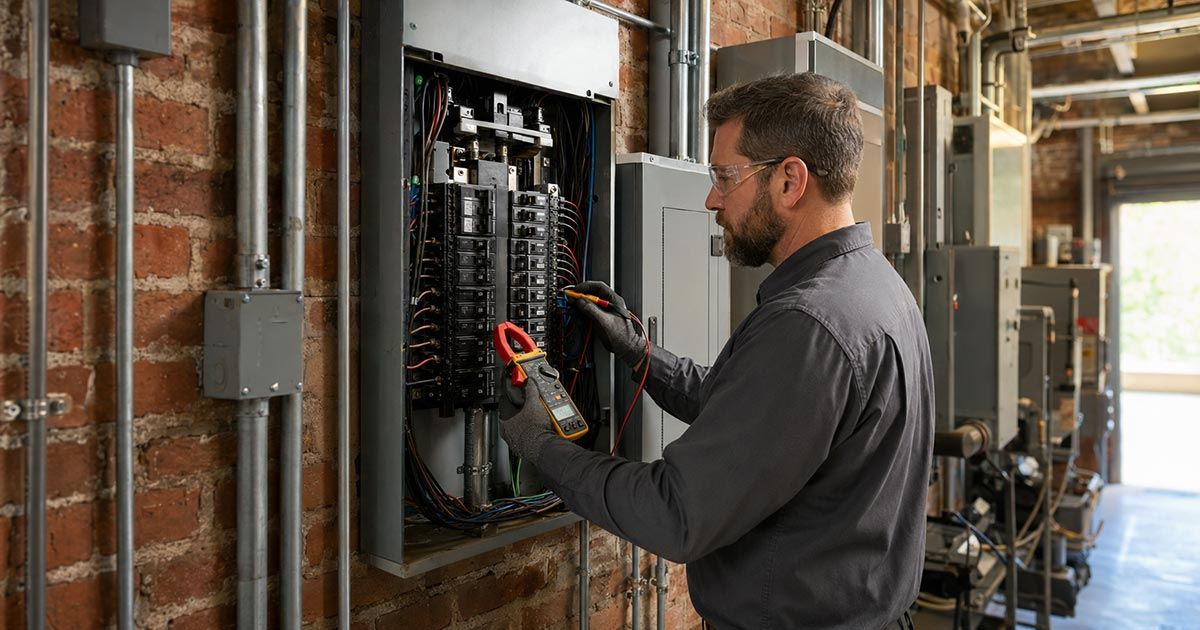
Older commercial buildings are part of Weatherford’s character, but many were wired before businesses depended on large HVAC systems, commercial kitchen equipment, computer networks, specialized machinery, security systems, and high-output lighting.
If your business is moving into an older property, adding equipment, expanding its operations, or experiencing unexplained power problems, a commercial electrical load assessment in Weatherford, TX can determine whether the building’s electrical system has enough safe, usable capacity for today’s demands.
This is not simply a question of whether there is an open space in the breaker panel. A qualified assessment considers the electrical service, connected equipment, expected demand, panel condition, feeder capacity, circuit distribution, and how the building actually operates during its busiest periods.
Matador Electric helps Weatherford and Parker County businesses identify electrical capacity problems before they become failed inspections, damaged equipment, emergency shutdowns, or expensive project delays.
Why Older Weatherford Commercial Buildings Struggle With Modern Power Demands
Many older commercial properties were designed around much smaller electrical loads. The original system may have powered basic lighting, a limited number of receptacles, and comparatively simple heating or cooling equipment.
Over time, the building may have been converted from one use to another. A former office may become a restaurant. A retail space may become a medical office. A storage building may become an active fabrication shop. Each new tenant can add equipment without anyone evaluating the total demand placed on the building.
Common additions include:
- Larger or additional air-conditioning systems
- Commercial refrigerators, freezers, ovens, and cooking equipment
- Air compressors, welders, lifts, pumps, and shop machinery
- Servers, computers, printers, and communications equipment
- Exterior lighting, signs, cameras, and access-control systems
- Additional offices, workstations, and receptacles
- EV chargers or other high-demand electrical equipment
The building may continue operating normally until several major loads run at once. During a hot Weatherford afternoon, for example, multiple HVAC units may be operating at the same time that kitchen equipment, machinery, lighting, and office systems are drawing power. That peak demand can expose weaknesses that are not obvious during a quiet inspection.
What Is a Commercial Electrical Load Assessment?
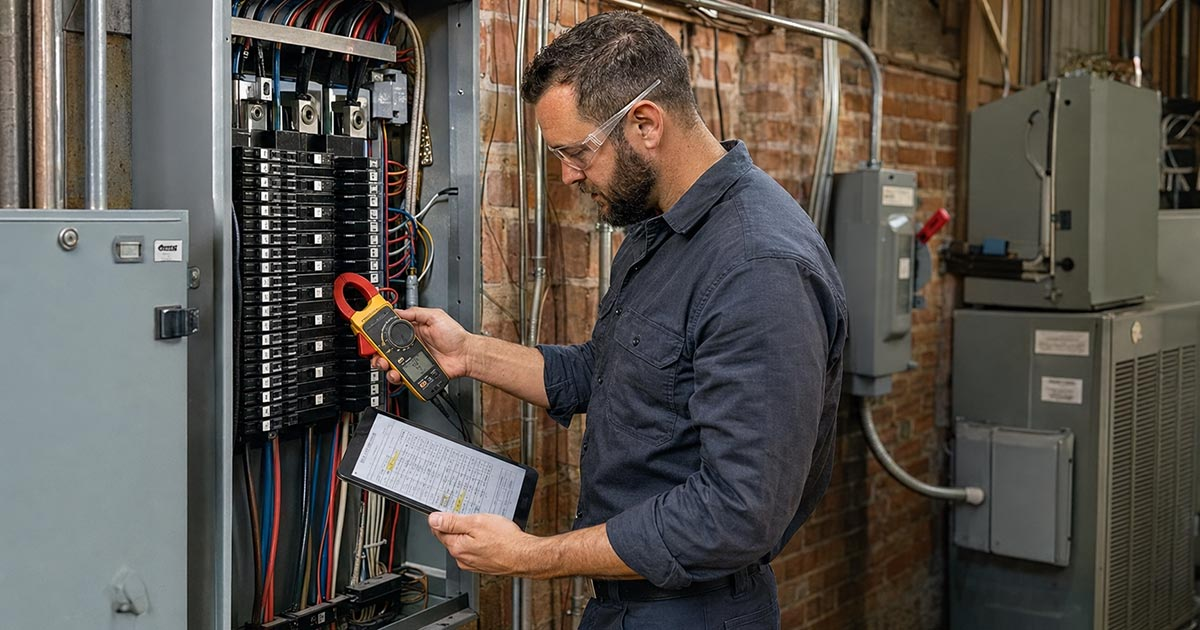
A commercial electrical load assessment evaluates how much electricity a building and its equipment require and whether the existing electrical system can safely supply that demand.
Depending on the building and the planned work, the evaluation may include a code-based load calculation, field measurements, an equipment inventory, a review of available service capacity, or a combination of these methods.
The goal is to answer several practical questions:
- Does the existing electrical service have sufficient capacity?
- Can the panel and feeders support the current and proposed loads?
- Are circuits properly distributed, labeled, and protected?
- Will new equipment require dedicated circuits or different voltage?
- Is three-phase power available if the equipment requires it?
- Are aging components creating heat, voltage, or reliability problems?
- Will the project require an electrical service or panel upgrade?
A load assessment is different from simply looking for an unused breaker position. An apparently open panel can still have limited electrical capacity. Conversely, a full panel does not automatically mean the entire electrical service must be replaced. The system must be evaluated as a whole.
Warning Signs Your Business May Be Exceeding Its Electrical Capacity
Electrical capacity problems often provide warnings before a complete failure occurs. Weatherford business owners and property managers should pay attention to the following conditions:
- Breakers trip when HVAC or equipment starts
- Lights dim or flicker when motors or compressors operate
- Equipment shuts down, resets, or loses power unexpectedly
- Outlets, breakers, or panel covers feel unusually warm
- The electrical panel buzzes, crackles, or produces an unusual odor
- Extension cords or power strips are being used as permanent wiring
- There are not enough dedicated circuits for essential equipment
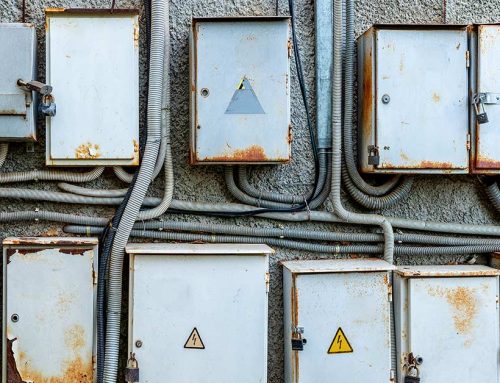
- The building has several added subpanels with unclear labeling
- Fuses or breakers have been replaced repeatedly
- Electrical problems become worse during peak summer demand
A tripping breaker should not automatically be replaced with a larger breaker. Breakers are designed to protect conductors and equipment. Increasing the breaker size without verifying the circuit can remove that protection and create a serious overheating or fire risk.
If you notice burning odors, visible smoke, arcing, scorch marks, or an excessively hot panel, stop using the affected equipment and call a licensed electrician immediately. Matador Electric provides 24/7 emergency electrical service for urgent problems in Weatherford and surrounding communities.
Schedule an Assessment Before Adding HVAC, Kitchen Equipment, or Machinery
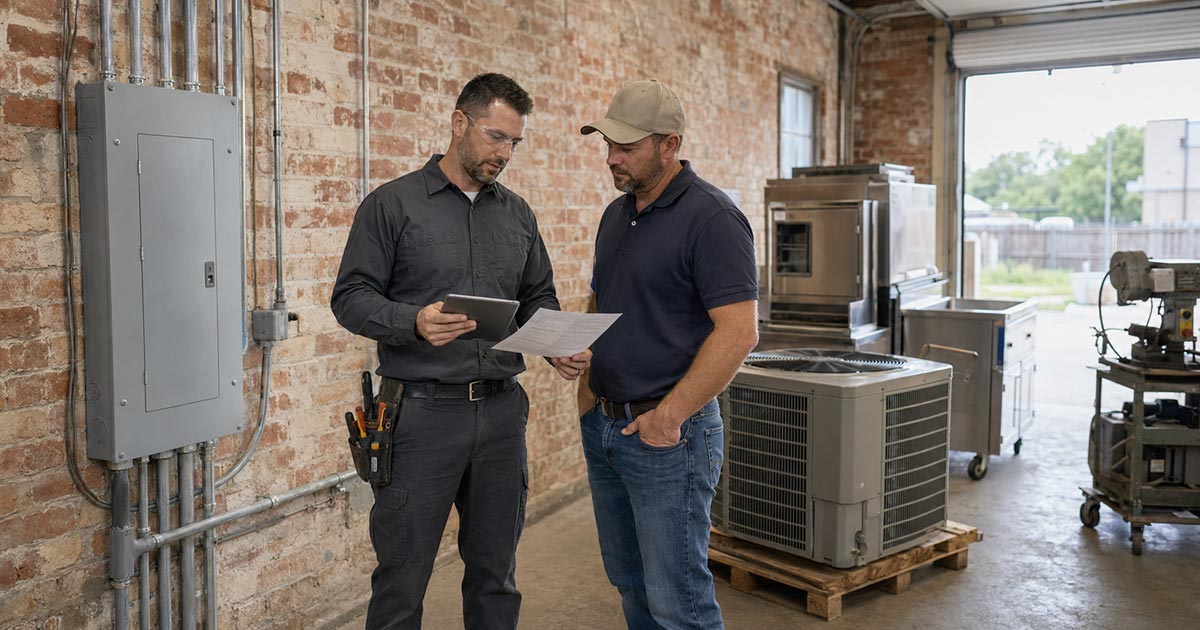
The best time to evaluate electrical capacity is before purchasing equipment, signing a commercial lease, or beginning a tenant finish-out.
Commercial equipment may require more than a new receptacle. Its specifications can call for a dedicated circuit, a particular voltage, three-phase power, disconnecting means, special overcurrent protection, or changes to the building’s distribution system.
A commercial HVAC replacement can present a similar issue. New equipment is not guaranteed to have the same electrical requirements as the equipment it replaces. Additional rooftop units, electric heat, exhaust systems, refrigeration, or kitchen appliances can substantially change the building’s electrical demand.
Before installation, provide the electrician with the equipment nameplate information or manufacturer specifications. This allows the electrical requirements to be compared with the building’s available service and circuit capacity.
An early assessment can help a business:
- Avoid ordering equipment the property cannot support
- Include electrical upgrades in the project budget
- Reduce delays during permitting and inspection
- Coordinate electrical work with HVAC and equipment contractors
- Plan shutdowns around business hours
- Protect sensitive or expensive equipment
What a Commercial Electrician Examines During the Assessment
The exact scope depends on the property, but a commercial electrician may evaluate the following components and conditions.
Electrical Service and Available Capacity
The electrician identifies the service rating, voltage, phase configuration, main disconnect, and other service characteristics. These findings are compared with existing and proposed electrical demand.
Main Panels and Subpanels
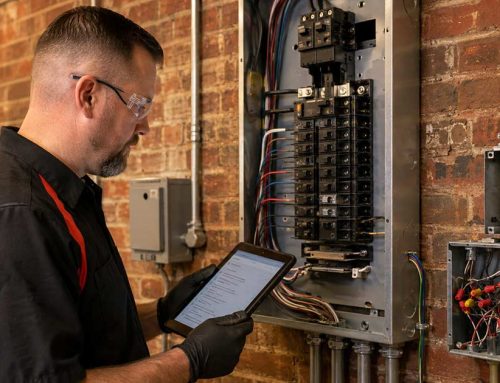
Panels are checked for their ratings, condition, labeling, breaker compatibility, visible overheating, corrosion, improper modifications, and available circuit capacity.
Feeders and Branch Circuits
The electrician evaluates whether conductors, overcurrent protection, and circuit arrangements are appropriate for the loads they serve. Frequently tripping or overloaded circuits may require correction rather than repeated resets.
Existing and Proposed Equipment
HVAC units, motors, kitchen appliances, refrigeration, machinery, lighting, signs, receptacles, and other significant loads are documented. Proposed equipment should be included so the assessment reflects where the business is going—not only how it operates today.
Operating Demand
When appropriate, electrical measurements or available demand information may be used to understand how the property performs during normal and peak operation.
Grounding, Bonding, and Visible Safety Concerns
An assessment may also uncover grounding, bonding, wiring, clearance, damage, labeling, or installation issues that should be corrected as part of the project.
For a broader evaluation of an existing property, Matador Electric also provides commercial electrical inspections and safety checks.

Possible Solutions for an Older Commercial Electrical System
Discovering a capacity issue does not automatically mean the entire building must be rewired. The correct solution depends on the condition of the existing system, the business’s operational needs, and the proposed equipment.
Possible recommendations may include:
- Adding properly sized dedicated circuits
- Balancing loads across available panels or phases
- Replacing damaged or obsolete electrical components
- Installing a larger panel or additional distribution equipment
- Upgrading feeders or portions of the wiring system
- Increasing the building’s electrical service capacity
- Coordinating service changes with the utility provider
- Installing more efficient lighting or equipment where appropriate
- Separating critical equipment from less essential loads
- Planning upgrades in phases to reduce operational disruption
Matador Electric provides electrical upgrades and rewiring as well as electrical panel upgrades in Weatherford for properties that need safer, more dependable capacity.
Weatherford Permits, Electrical Codes, and Commercial Improvements
Commercial electrical improvements should be planned around applicable licensing, permitting, code, and inspection requirements.
The City of Weatherford’s commercial permitting information explains that permits are required for applicable new development, expansions, and improvements to existing commercial properties. The exact permit and inspection requirements depend on the location and scope of work.
The Texas Department of Licensing and Regulation also explains that electrical contractors must hold the proper contractor license and have a licensed Master Electrician assigned as the company’s Master Electrician of Record.
A professional electrical load assessment helps identify the likely electrical scope before construction begins. That can make it easier to prepare a realistic budget, coordinate permit documents, and avoid discovering a major capacity problem after equipment has already arrived.
Property owners and contractors should confirm current requirements with the City of Weatherford or the authority having jurisdiction before work begins.
Why This Matters Before Leasing or Buying an Older Building
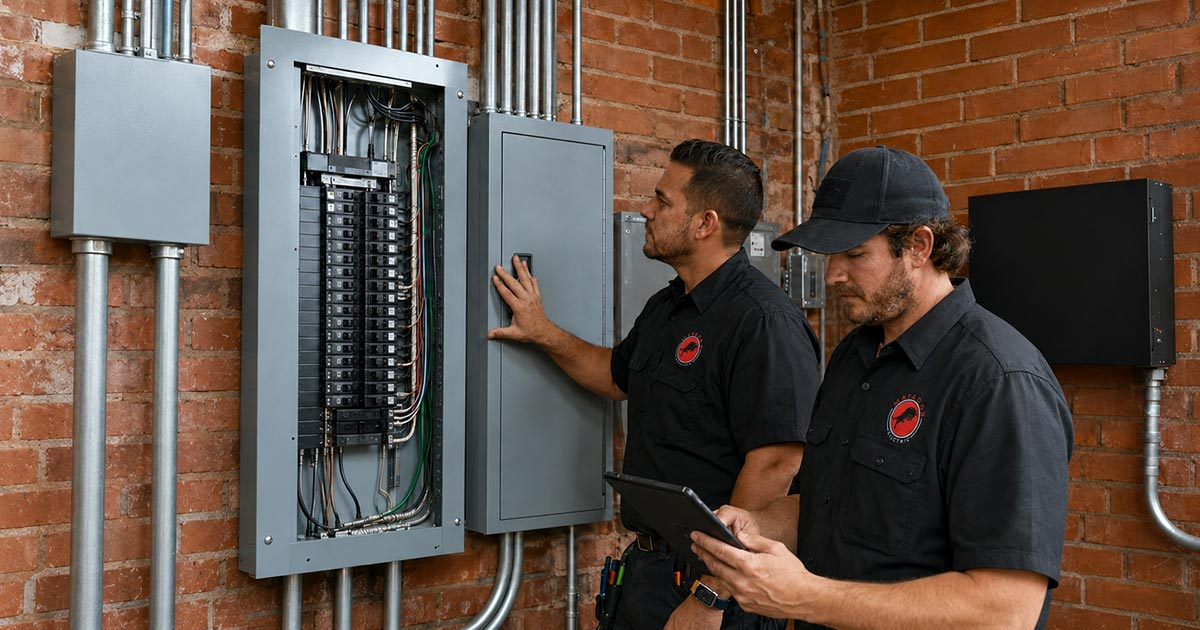
A building can appear ready for occupancy while still lacking the electrical infrastructure required for the buyer’s or tenant’s intended use.
Before signing a lease or closing on a commercial property, determine whether the electrical system can support your actual operation. This is especially important for restaurants, medical offices, salons, automotive facilities, fabrication shops, warehouses, laundries, and businesses that depend on substantial HVAC or specialized machinery.
If upgrades are required, the findings may affect:
- The purchase or lease budget
- Tenant-improvement allowances
- Responsibility between the landlord and tenant
- The construction schedule
- Equipment selection
- The planned opening date
An assessment before signing is generally more useful than learning about the limitation after the business has committed to the property.
Schedule a Commercial Electrical Load Assessment in Weatherford, TX
If your older building is adding HVAC, kitchen appliances, machinery, offices, refrigeration, lighting, or other major equipment, do not assume the existing electrical system can support it.
Matador Electric’s licensed commercial electricians serve businesses, property owners, facility managers, and contractors throughout Weatherford and Parker County. Our team can evaluate existing conditions, identify capacity concerns, and recommend a practical path forward.
Learn more about our commercial electrical services in Weatherford or review the Commercial Priority Service Plan for ongoing inspections and preventive maintenance.
Call (682) 290-1884 or request a commercial electrical assessment online before adding new equipment or expanding your operation.
Frequently Asked Questions About Commercial Electrical Load Assessments
What Is a Commercial Electrical Load Assessment?
A commercial electrical load assessment determines how much power a business currently uses, how much proposed equipment will require, and whether the building’s service, panels, feeders, and circuits can safely support that demand.
When Should a Weatherford Business Request an Electrical Load Assessment?
Request an assessment before adding major HVAC equipment, restaurant appliances, machinery, refrigeration, EV chargers, offices, or another tenant. It is also helpful before buying or leasing an older commercial building and when breakers trip or lights dim under load.
Does an Open Breaker Space Mean My Panel Has Enough Capacity?
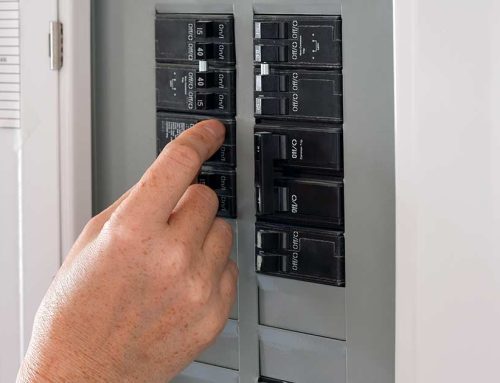
No. An open breaker position only indicates physical space in the panel. It does not prove that the panel, feeder, or electrical service has sufficient capacity for another load. A licensed electrician must evaluate the entire system and the equipment requirements.
Will My Business Need a Service Upgrade?
Not necessarily. Some properties only need dedicated circuits, repairs, load balancing, or limited distribution upgrades. Other buildings may require a larger panel, upgraded feeders, or increased utility service. The assessment identifies the appropriate solution.
Are Permits Required for Commercial Electrical Upgrades in Weatherford?
Permits and inspections may be required depending on the location and scope of work. The City of Weatherford requires permits for applicable commercial developments, expansions, and improvements. Confirm current requirements with the City or other authority having jurisdiction before work begins.